

With Donald Trump’s executive orders bringing tariffs to the forefront of his economic policies, it is important to consider their impact. Regardless of the implementation of tariffs, certain companies are positioned to weather them better than others. One way we assess susceptibility to these kinds of business risks is to evaluate a company’s “quality of earnings”. Many factors influence a company’s quality of earnings and in this note, we’ll evaluate the role revenue plays within an example company.
Quality of earnings is a concept used to assess the sustainability and predictability of a company’s financial performance in various conditions over time. Key areas that influence a company’s quality of earnings are the reliability of revenue, the ability to maintain margins, the ability to control costs, the ability to develop or maintain operating leverage and scale, and the ability to weather economic, political, competitive, and technological changes over time. Steady and reliable company earnings are valued more highly than erratic and volatile earnings. The reliability and predictability of a company’s revenues revolve around its knowledge of its customers, its breadth of customers, and its relevance to its customers. For example, a contract co-packer and food manufacturer, transitioning from high customer concentration to high quality of earnings involves several strategies. This article explores these strategies and discusses how they can help offset tariff uncertainty.
-
Know your customer
-
Improving Financial Transparency and Reporting
High-quality earnings are characterized by transparency and accuracy in financial reporting. Companies should adopt conservative accounting practices and ensure compliance with Generally Accepted Accounting Principles (GAAP). This includes consistent revenue recognition, prudent expense allocation, and clear disclosure of non-recurring items. Transparent financial reporting builds investor confidence and reflects the true economic performance of the company. Accurate financial reporting also helps in assessing the impact of tariffs and making informed decisions to mitigate their effects.
-
Is the customer profitable? Optimizing Operational Efficiency
Efficient operations contribute to sustainable profitability and high-quality earnings. Companies should continuously evaluate and optimize their operational processes to reduce costs and improve margins. This includes streamlining supply chains, adopting lean manufacturing practices, and leveraging technology to enhance productivity. Operational efficiency boosts profitability and provides the financial flexibility to invest in growth initiatives. By optimizing operations, companies can better absorb the costs associated with tariffs and maintain competitive pricing.
-
-
Know your customer breadth
-
Diversifying the Customer Base
One of the most effective strategies to reduce customer concentration is diversifying the customer base. This involves expanding the company’s market reach to attract a broader range of customers. For a food manufacturer, this could mean targeting different segments such as retail chains, food service providers, and direct-to-consumer channels. By catering to various customer segments, the company can reduce its reliance on a few key clients and enhance revenue stability. In the example below, the business has declining retail sales but makes up for this through its other segments, leading to overall growth. Additionally, diversifying the customer base can mitigate the impact of tariffs by spreading risk across different markets and reducing dependency on any single region.
Resilience Through Diversification

-
New customers: Strategic Acquisitions and Partnerships
Strategic acquisitions and partnerships can help companies diversify their customer base and enhance their market presence. By acquiring companies with complementary products or services, businesses can tap into new customer segments and reduce dependency on existing ones. For example, a food manufacturer might acquire a company specializing in plant-based foods to expand its product portfolio and reach health-conscious consumers. Strategic partnerships can also provide access to new markets with different tariff structures, reducing overall tariff exposure.
-
Fostering a Culture of Innovation
A culture of innovation encourages continuous improvement and adaptation to changing market conditions. Companies should foster an environment where creativity and experimentation are encouraged. This can lead to the development of new products, services, and business models that attract diverse customer segments and enhance earnings quality. For example, a food manufacturer might invest in sustainable packaging solutions or new food technologies to stay ahead of industry trends. Innovation can also help companies find alternative materials or processes that are less affected by tariffs.
-
-
How integral to your Customer are you?
-
Enhancing Product and Service Offerings
Developing and enhancing product and service offerings can attract a wider customer base and increase revenue streams. Innovation plays a crucial role here. A food manufacturer should invest in research and development to create new products or improve existing ones. This encourages existing customers to purchase more frequently. For example, introducing organic or specialty functional food products can appeal to health-conscious consumers and niche markets. By offering a diverse range of products, the company can better navigate tariff changes by shifting focus to products with lower tariff impacts.
-
Implementing a Recurring Revenue Model
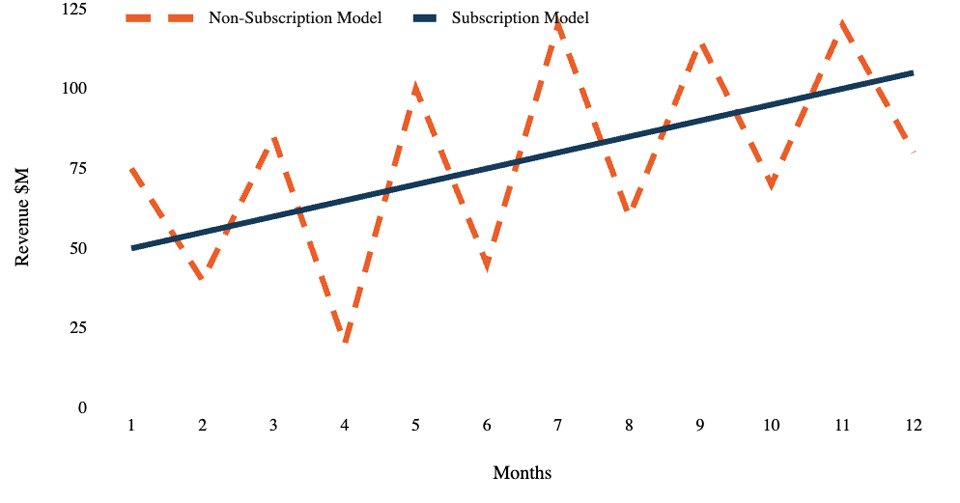
Transitioning to a recurring revenue model, such as subscription-based services, can significantly improve earnings quality. For a food manufacturer, this could involve offering subscription boxes for meal kits, daily dosage nutritional supplements, or specialty food items that enhance convenience and self-care. As indicated below, even with the same total sales, recurring revenue provides a steady and predictable income stream, reducing volatility and enhancing financial stability. This model also helps offset tariff uncertainty by ensuring consistent revenue, even when tariffs fluctuate.
Predictability and Stability with Recurring Revenue

-
Strengthening Customer Relationships
Building strong, long-term relationships with customers can lead to increased customer loyalty and reduced churn rates. Companies should focus on providing exceptional customer service, personalized experiences, and value-added services. This approach retains existing customers and attracts new ones through positive word-of-mouth. For instance, offering customized packaging solutions or exclusive product lines for key clients can strengthen partnerships and foster loyalty. Strong customer relationships can also provide leverage in negotiating better terms with suppliers and customers, helping to mitigate the impact of tariffs.
-

Transitioning from low-quality to high-quality revenue requires a multifaceted approach. By diversifying the customer base, enhancing product offerings, implementing a recurring revenue model, strengthening customer relationships, pursuing strategic acquisitions, improving financial transparency, optimizing operational efficiency, or fostering a culture of innovation, a contract co-packer and food manufacturer can achieve sustainable and reliable revenue and earnings. These strategies mitigate the risks associated with customer concentration and help offset the uncertainties and financial impacts of tariffs, positioning the company for long-term success.
About Bond Capital
Bond Capital is an award-winning private credit fund. As a direct lender, Bond Capital provides advice and money across the entire risk curve. Bond Capital secured structured credit financing enables business owners to maintain control ownership in exchange for yield and capital preservation. Across multiple cycles and for over 20 years, Bond Capital has advanced secured investment quality credit to lower middle market companies throughout North America.


